Eating vegetarian and vegan at restaurants takes a little homework, but it’s gotten much easier as menus add plant-based options and apps map out vegetarian-friendly spots near you. The catch is that “looks vegetarian” and “actually is vegetarian” aren’t the same thing. A salad, a bowl of beans, or a cup of soup can hide anchovies, lard, or chicken stock. This guide walks you through the sneaky ingredients, the chains worth ordering from, the destination restaurants worth a trip, and the exact questions to ask your server. For more by-restaurant breakdowns, browse our restaurant guides or start at the What’s Vegetarian homepage.
Why eating vegetarian and vegan at restaurants trips people up
The hardest part of dining out isn’t the obvious meat dishes. It’s the foods you’d swear are plant-based that quietly aren’t. Kitchens use animal products for flavor and texture in ways the menu never spells out. Knowing the usual suspects lets you ask the right question instead of guessing.
One distinction matters throughout this guide. Lacto-ovo vegetarians eat dairy and eggs but no meat, poultry, or fish. Vegans skip all animal products. So rennet, gelatin, lard, fish sauce, and anchovy are problems for both groups, while bone-char sugar, carmine dye, and shared grills are mostly vegan concerns. Keep that split in mind when you read an ingredient list.
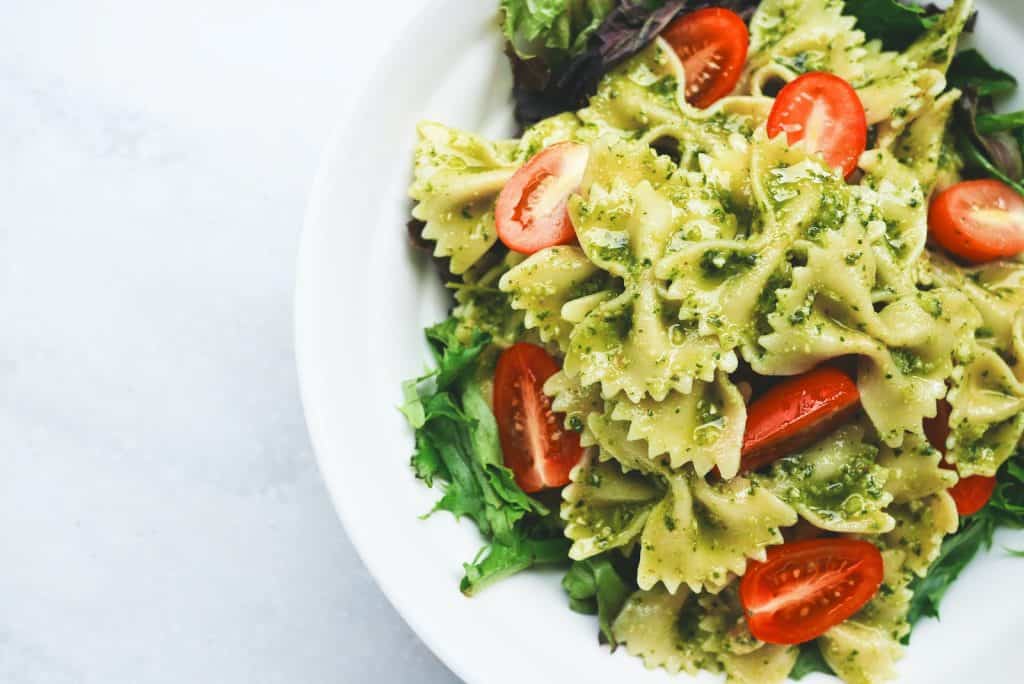
Hidden animal ingredients that catch vegetarians off guard
These are the items that look safe and aren’t. Scan this list before you order, and you’ll know exactly what to confirm with your server.
- Parmesan (Parmigiano-Reggiano and Grana Padano). Authentic, EU-protected versions are made with animal (calf) rennet by law, so the real wheel is never vegetarian. Domestic US “parmesan” often uses microbial rennet and may be fine. Ask which one tops your pasta, or request a microbial-rennet hard cheese. (The Takeout)
- Worcestershire sauce. Most versions contain anchovies. It hides in Bloody Marys, marinades, and even some veggie burgers and sauces. Vegan-labeled bottles exist, so ask if a dish is finished with it. (PETA)
- Caesar dressing. The traditional recipe has anchovies plus egg. A Caesar salad is one of the most common “I thought a salad was safe” traps. (Food Republic)
- Kimchi. Most traditional and nearly all restaurant kimchi contains fish sauce, salted shrimp, or anchovy extract. Don’t assume the Korean side dish is plant-based; ask for vegan kimchi specifically. (Hurry The Food Up)
- Thai and Southeast Asian curry. Curry pastes often contain shrimp paste, and kitchens commonly finish even “vegetable” curries with fish sauce. Ask two questions: is the paste fish-free, and is fish sauce added at the end? (Hurry The Food Up)
- Refried beans. Traditionally cooked in pork lard, so they’re not vegetarian even when the menu just says “beans.” Ask for the oil version or order black beans instead. (Tasting Table)
- Gelatin. Made by boiling animal bones, skin, and connective tissue. It shows up in marshmallows, gummy candies, some yogurts, panna cotta, and mousses. (VegOut)
- Cane sugar refined with bone char. Much white cane sugar is filtered through charred cattle bone. Beet sugar, USDA-organic cane sugar, and raw or turbinado are bone-char-free. This matters for strict vegans, not most lacto-ovo vegetarians. (PETA)
- “Vegetable” soup on meat stock. Minestrone, French onion, and house “veggie” soups are routinely built on chicken or beef broth. French onion usually gets a Gruyère crouton (animal rennet) too. Always ask if the base is real vegetable broth. (VegOut)
- Carmine (cochineal). A red dye made from crushed beetles, found in some red or pink drinks, candies, and yogurts. A concern for vegans and strict vegetarians. (VegOut)
The best fast-food chains for eating vegetarian and vegan at restaurants
When you need something quick, a handful of chains do plant-based well. Here’s what to order and where the catches are.
Taco Bell
Taco Bell is the most reliably vegetarian big chain, because its vegetarian menu is certified by the American Vegetarian Association (AVA). Named AVA-certified items include the Bean Burrito, Cheese Quesadilla, Spicy Potato Soft Taco, Black Bean Crunchwrap Supreme, and the Veggie Power Menu Bowl. The app surfaces a “Veggie Cravings” list with more than a dozen certified options. AVA “Vegetarian” certification is lacto-ovo, so dairy and eggs are fine. Many items go vegan when you order them “Fresco style,” which swaps cheese and sour cream for pico de gallo. One caveat: Taco Bell handles vegetarian and meat ingredients in common, so cross-contact can happen. (Taco Bell)
Chipotle
Chipotle’s standout plant protein is sofritas, organic braised tofu in a smoky chipotle-and-tomato sauce. Build a vegan bowl with sofritas, fajita veggies, black beans, rice, salsa, and guacamole. Everything is assembled in front of you, so you can watch the build and skip anything you don’t want. For the full walkthrough, see our guide to what’s vegetarian at Chipotle. (Vegan.com)
Qdoba
Qdoba gives you a fully customizable vegan build: corn or flour tortillas, black or pinto beans, brown or cilantro-lime rice, fajita veggies, salsas, and guac. Like Chipotle, the assembly line is in the open, so you can see what goes in your bowl. (PETA)
Burger King (read this before you order the Impossible Whopper)
The Impossible Whopper is the clearest example of why “plant-based on the menu” doesn’t mean “vegetarian as served.” It comes with egg-based mayo by default, and the patty is flame-grilled on the same broiler as beef and chicken. To get closer to vegetarian or vegan, order it with no mayo and ask for it cooked separately in the oven if your location can do that. The shared-grill issue isn’t a rumor: a vegan customer filed a class-action lawsuit over it in 2019. Burger King still won’t label the patty vegan or vegetarian because of the open kitchen. (TODAY, Time)
All-vegan restaurants worth a special trip
Sometimes you don’t want to interrogate a server at all. These all-vegan spots take the guesswork out, because everything on the menu is plant-based.
Crossroads Kitchen — Los Angeles and Las Vegas
Crossroads Kitchen is upscale all-vegan fine dining at 8284 Melrose Ave in LA’s Beverly Grove, with a second location in Las Vegas. Chef Tal Ronnen opened it in 2013, and it’s frequently ranked among America’s top fine-dining vegan restaurants. This is the spot for a plant-based night out that feels like an occasion. (Crossroads Kitchen)
Slutty Vegan — Atlanta and beyond
For vegan comfort food, Slutty Vegan delivers. Founder Pinky Cole started it in Atlanta in 2018, and the burger chain now runs flagship spots in Atlanta’s West End and Edgewood, plus Athens, Duluth, and Jonesboro in Georgia, Birmingham in Alabama, and Brooklyn in New York. It’s a great example of a Black-owned vegan success story built on indulgent burgers. (Slutty Vegan)
Plant — Asheville, North Carolina
You don’t need a major metro for serious vegan dining. Plant, at 165 Merrimon Ave in Asheville, has been serving scratch-made all-vegan food since 2011. Chef-owner Jason Sellers was a 2024 James Beard Award semifinalist, which tells you mid-size cities can punch well above their weight here. (Uncorked Asheville)
Apps that make eating vegetarian and vegan at restaurants easy
The fastest way to find a safe meal in an unfamiliar place is to let an app do the scouting. A few options cover most situations.
HappyCow
HappyCow is the go-to app for finding vegan and vegetarian restaurants worldwide. You can search and filter by vegan, vegetarian, vegetarian-friendly, or gluten-free, narrow by cuisine, read community reviews and photos, save favorites, and download offline lists with HappyCow Pro for travel. One quirk to know before you download: the Android app is free on Google Play, while the iOS app is a one-time paid purchase listed around $4.99. (HappyCow)
Google Maps and Yelp
You don’t always need a dedicated app. Both Google Maps and Yelp now support a “vegan” or “vegetarian” search filter, which is handy when you’re already using them for directions or reviews. They won’t go as deep as HappyCow on vegetarian-specific detail, but they’re everywhere and free. (Flavor365)
| App | Cost | Best for |
|---|---|---|
| HappyCow | Free on Android; ~$4.99 one-time on iOS | Deep vegetarian-specific search, reviews, offline travel lists |
| Google Maps | Free | Quick “vegan/vegetarian” filter while navigating |
| Yelp | Free | Reviews plus a “vegetarian” search filter |
The most vegan-friendly U.S. cities
If you’re picking a destination around plant-based food, some cities make it effortless. WalletHub’s latest ranking, published in September 2025, compared the 100 largest U.S. cities across 17 metrics. Its top 10 are Portland, Los Angeles, Austin, San Francisco, Oakland, Phoenix, Miami, Seattle, Orlando, and Madison. Portland residents order vegetarian or vegan food about 148% more often than the national average, and Los Angeles residents about 187% more often. (WalletHub)
Rankings disagree depending on how you measure. PETA’s separate 2025 list leads with Chicago, then Philadelphia, then Washington, D.C., with New York City in the top tier. So if your favorite city isn’t on one list, check the other before you write it off. (PETA)
For context on how many people this matters to: Gallup’s 2023 poll found 4% of U.S. adults identify as vegetarian and 1% as vegan. The same poll showed women are vegetarian at three times the rate of men (6% versus 2%), and self-identified liberals at 9% versus 3% of moderates and conservatives. Fewer than 1% identify as both vegetarian and vegan. (Gallup)
The questions to ask your server
A short, specific question gets a better answer than “is this vegetarian?” Servers don’t always know the full ingredient list, so name the thing you’re worried about. Here’s a ready-to-use set, drawn from the traps above.
- “Is the soup or sauce made with vegetable broth, or chicken or beef stock?”
- “Are the beans cooked in lard, or do you have an oil or vegetable version?”
- “Does this dish or dressing have fish sauce, anchovy, or Worcestershire in it?”
- “Is the cheese made with animal rennet, or do you have a microbial-rennet option?”
- “If I order the plant-based patty, is it cooked on a shared grill with meat?”
One more habit that pays off: order beans, salsa, rice, and guacamole at build-your-own spots where you can watch the assembly. Black beans usually beat refried, a vegetable-broth soup beats a “house” soup, and a microbial-rennet cheese beats a PDO Parmesan if you want to keep your pasta vegetarian. Small swaps, made out loud, are what make eating vegetarian and vegan at restaurants work day to day.